

Key Metrics
P/E is around 15
ROIC well over 20
All currencies in the article are in Euro’s.
Today’s company, Fope S.p.A. (FPE) is a company I follow already for a few years. Fope’s market capitalization is just above €200 million and considered a micro cap. Much of the value growth is attributed to the recent decade.
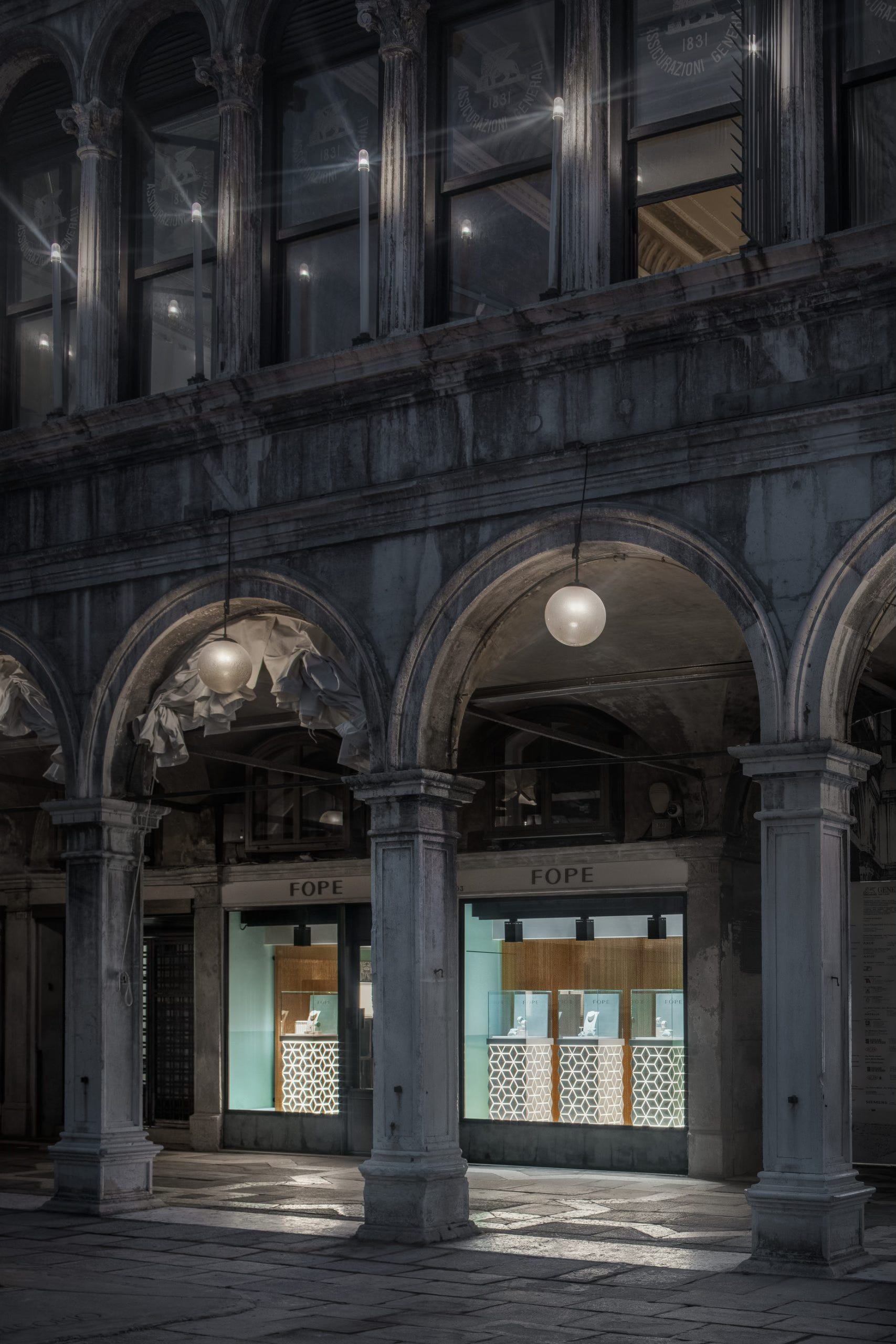
Doing some good ol’ scuttlebutt research (attributable to Philip Fisher), I visited their first boutique in Venice on my honeymoon no less. Am I dedicated or what?
The Business
Fope is an Italian fine luxury jewelry designer and producer. The company is close to celebrating its 100th birthday as it was founded in 1929. Fope started out as a specialist in extendable metal watch straps.
From the 70s, it transitioned to creating designs. In the early 1970s, the founder’s children (Umberto and Inis) became active at the company and quickly took management positions. Umberto laid the foundation for the mesh pattern what identifies the company’s collections.
The company started in the early 2000 to improve advertising and requested patterns for their unique mesh designs.
To improve the sales channels, the company decided to open their first boutique in Venice (Italy) in 2015. And a year later they became a public company.
Recently few more boutiques opened in London, Kuala Lumpur and Tokyo.
Customers
The company’s customers have typically a large disposable income. Bracelets, necklaces and rings range from €3000 to €40k. The collections for women are less for daily wear and more for formal dinners, gala nights etc.
Fope mainly designs for women. However, Fope has since 2021 also a product line for men. The target men who identified themselves as dynamic, safe, likes to travel, works, loves comfort & elegance, and is practical.
Margins Development
Fope as their headquarters in Vicenza (Italy) and designs develops and produces all jewelry in-house. Transportation, buildings and land are kept to a minimum because everything is al in one location.
The company only produces jewelry when they have orders. This keeps the inventory low. Especially with raw material price fluctuations, their liabilities are reduced to minimum when prices of raw materials decline.
Fope takes out loans to purchase the precious materials like gold. Then employees process it into a product and ship it off to the customer or the store. Afterwards they pay off the gold loan quickly.
Most of the long-term debt on the balance sheet are paid back the same year. This is a unique case where LT debt isn’t a bad thing. Here it indicates that the company has a higher order book.
The company hedges gold purchases to be unaffected by rising gold prices and to keep margins high. Over the year, Fope improved their margins more by updating their IT systems, new machinery and so on. Which is reflective in the margin growth.
In the chart above, it displays the revenue, gross profit margin and operating income margin over the last 10 annual reports.
The revenue grew 13.5% CAGR in this period, while the net income grew 23% CAGR over the same period. It is a clear display on the impact of improving margins throughout the income statement.
Free Cash Flow
In 2024, Fope expanded the headquarters by purchasing the building next doors to facilitate the future growth using free cash flow.
They also use the FCF to open new boutique stores and pay a dividend to the shareholders.
In the chart above, it is clear that the first 5 years had lower FCF margins. This was mainly due to a yearly increase in working capital. Also the net income was back then lower.
The capital expenditures are relatively flat every year. There is minimal growth in CapEx.
The recent change in work capital adjustments might create higher FCF margins for the coming years as it proved in the last few years.
Unfortunately, the company hasn’t shared any expectations on the development of the free cash flow or how to use the FCF in the coming years.
Return on Invested Capital
Fope has a high return on invested capital, hovering around 20%. Here ROIC is calculated as Nopat divided by Invested Capital. In Fope’s case, retained earnings carries the weight of the equity. Which has a huge influence on the ROIC metric.
In many cases, I find the ROIC being higher than 10% when the retained earnings grow year after year.
In general, the retained earnings growth is valuable when looking for GARP investments.
Management
The company doesn’t discuss the executives and CEO in their annual reports. By digging around in the company’s history and from other sources, we can learn a few things.
The children of the founder, Inis and Umberto Cazzola, have a management position since early 1970s. And to this day, both children sit on the board as chair, and vice chair.
It is interesting to know if their offspring would take over from them. Unfortunately, I couldn’t find anything about this playing out in the future or if any offspring works at Fope.
The appointed CEO is Diego Nardin. Previously, he worked at Deloitte and got a position as a board member for Fope. At the same time, mr. Nardin was tasked with a project for the company.
Fope enthusiastically received Nardin’s project results and appointed him CEO on the next opportunity. He holds the position since 2009.
Fope’s management likes to hire people from within and prefers candidates who will hold positions for a long time. Just like the chief marketing officer. She works in the company from 1970.
The news coverage or other sources around the company are scarce. Sadly, there is nothing known about the age of the board members, CEO and other executives.
Based on the information since when they work for a company, it looks like they’re older people closer to retirement age. Which might be a problem when they want to look for replacements.
Shareholder letters
I always like to read the shareholder letters written by the CEO. It always give some clue even when they are brief.
Mr. Nardin started 10 years ago with little information. I got the feeling that he isn’t writing them for outside investors who own shares.
I notice a trend developing where the letters include more information every year. So, the shareholder letters get more and more mature. But I am still missing additional explanation to decisions, future plans and shared numbers.
I hope this will change in the coming years.
Ownership
The company has a large insider ownership. Family members own together 69% of the shares and is majority shareholder. Also the CEO, Diego Nardin, owns 5 1/2% of the shares. Together insiders own an impressive 3/4 of the company.
This leaves a small stake for outsiders. Since becoming a public company, insiders have sold a few shares.
Outside investors have no opportunity to influence management. We can only ride on the curtails of the insiders.
I don’t think this is a problem per se. The company operates effectively and improves every year, thus why would outside investors need to interrupt a fine functioning machine?
Growth
Various industry reports expect the luxury jewelry market to grow around 5% year over a year for the coming decade. It is a medium growing industry being in lock step with the economy.
This sounds like a boring industry. However, Fope has the ability to grow even faster. They are building up their brand awareness. By improving their marketing communications and opening boutiques in major capitals throughout the world.
As seen earlier, their margins improve too. Thus it can out-earn many companies in the industry.
Fope opens shop in shops every year. These are cooperations with independent jewelry store where Fope has their own display. The company has no projection or shared a target of how many shop in shop they want to open.
The same goes for the company-owned boutiques. These boutiques only display the Fope brand. The company has a small cash flow and fewer loan and credit possibilities. Thus it is challenging to expand boutiques rapidly and thus the brand awareness.
Competitors
Just like any business, Fope has competitors. In the fine luxury jewelry, it is less easy to identify direct competitors. Every competitor has their own distinct style. And no one has a dominating position on the market. The luxury market is highly fragmented.
Companies like Cartier, Bulgari and Van Cleef & Arpels make unique designs for the wealthy. Then there are smaller design, houses, and boutiques similar to Fope. These are usually privately owned.
Moat
A typical moat is patents. Fope holds patents for their mesh designs with very small springs integrated. It is a design and style what isn’t seen anywhere else. It is not known till what year the patents will hold.
In this case, the patterns are not a strong moat or a moat at all. Amount is only relevant when the product is desired.
The brand is also very weak and thus the desire is for their collections jewelry is low and unpredictable. The company is working hard to increase their marketing to create more brand awareness.
The company has international presence in newspapers, online advertising and social media. The company grew the instagram following with 12 thousand from last September to December.
Gaining a following like this isn’t impressive growth, but it validates that potential customers are interested in Fope’s offerings.
With this, the brand awareness could improve over time. However, for now it is too early to conclude the company’s success. It is hardly a moat.
The Risk
The major risk is the brand awareness I mentioned just now. Through the various marketing efforts, they slowly create more awareness. But when the marketing isn’t successful for whatever reason, it will be reflected in their sales.
It is still a fairly small company and building brand awareness may take a long time. The designs are very niche. Which may be more difficult to be accepted by the market.
Cyclicality
The jewelry industry is cyclical. The industry is divided into two groups. Catering to the masses and to the wealthy. The masses tends to reduce spending significantly when the economy is souring.
Only the very cheapest jewelry might see a boost because of the lipstick effect. The wealthy continued their spending, may it be in reduced manner. Thus the cyclical effect for fine jewelry designers, like Fope, is flattened slightly.
Conclusion
Fope is very small based on its market capitalization. Therefore, there is less information public, and it is harder to investigate the company in a long-term perspective.
The signs for a growing company are definitely there. However, it feels too early to conclude on making a proper investment on a company dependent on their brand awareness. It is comforting to know that it is mainly owned by one family. All their wealth is tied up in this one company. So they will make safer decisions going forward to preserve their wealth.
Coming back to the question if a microcap company can be a GARP. It is definitely possible and I think this company is proving it. But personally for me, I think there is not enough information over a longer time period to make an informed decision.
I will definitely keep an eye out on the company and will evaluate it again in the future.
Disclaimer
The information provided in this newsletter is for informational purposes only and does not constitute financial, investment, or professional advice. All opinions expressed herein are solely those of the author and are based on publicly available information as of the date of publication. Investments in stocks and other securities involve significant risk, including the potential loss of principal. Past performance is not indicative of future results. Readers are encouraged to do their own research and consult with a qualified financial advisor before making any investment decisions. The author and publisher of this newsletter assume no responsibility for any errors, omissions, or outcomes related to the use of this information.
By reading this newsletter, you acknowledge that the author is not liable for any decisions made based on the content provided.
Site visit due diligence during honey moon is impressive